Why Two Servings of the Exact Same Protein Source Can Digest at Noticeably Different Speeds
Quick Answer: Digestion speed for the same protein source changes based on what else is eaten alongside it, how it’s prepared (cooked versus raw, whole versus blended), and your stomach’s current contents from earlier meals, meaning identical grams of the same protein can digest meaningfully faster or slower depending entirely on context — this is why the same chicken breast can feel different eaten alone versus as part of a mixed, fiber-heavy meal.
The protein itself doesn’t change, but nearly everything around it changes how quickly your body actually processes it.

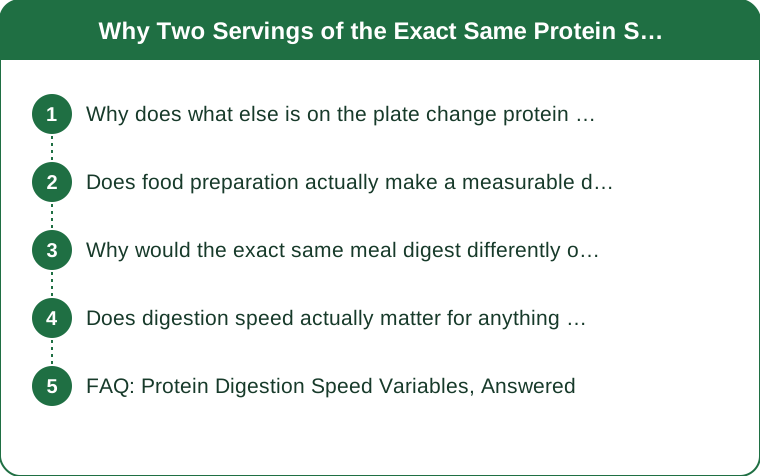
Why does what else is on the plate change protein digestion speed?
Fat and fiber both slow overall gastric emptying, meaning a protein source eaten alongside a high-fat or high-fiber meal digests more slowly overall than the same protein eaten with simple, quickly-digesting carbohydrates or on an empty stomach.
Does food preparation actually make a measurable difference?
Yes — cooking generally denatures protein structures in ways that make them easier and faster to digest than raw versions of the same food, and blending or grinding (like a protein shake versus a whole chicken breast) further speeds digestion by reducing the mechanical breakdown work your stomach needs to do.

Why would the exact same meal digest differently on different days?
Your stomach’s current contents matter — eating the same protein source shortly after a previous meal means it’s digesting behind food already in the stomach, while the same protein eaten after several fasted hours starts processing immediately, creating a real speed difference despite identical food.
Does digestion speed actually matter for anything practical, or is it just trivia?
Digestion speed affects things like post-meal energy levels, satiety timing, and how protein availability lines up with workout timing — for people specifically timing protein around training, understanding these variables helps explain inconsistent results from what looks like an identical approach.
FAQ: Protein Digestion Speed Variables, Answered
Does protein source itself (whey vs. chicken vs. beans) matter more than these context factors?
Protein source does create baseline speed differences, but preparation and accompanying foods can shift digestion speed meaningfully within any single source too.
Is faster digestion always better for muscle building goals?
Not necessarily — a mix of faster and slower-digesting protein across the day is generally considered useful for sustained amino acid availability, rather than always favoring speed.
Can I use this to intentionally speed up or slow down digestion for a specific goal?
Yes — pairing protein with fiber and fat intentionally slows digestion for sustained fullness, while a simple, unblended, low-fat protein source eaten alone speeds it up if quick availability is the goal.
TL;DR:
- Fat and fiber in the same meal slow overall protein digestion speed
- Cooking and blending both speed digestion compared to raw, whole forms
- Prior stomach contents from recent meals change how quickly new protein processes
- These variables explain why identical protein sources can feel different meal to meal
Keep Reading
This article is for general informational purposes only and is not medical advice. Always consult a qualified health professional for guidance specific to you.