Why Protein Timing Matters Far Less Than Total Daily Intake
The idea of a narrow post-workout anabolic window, protein needing to be consumed within roughly thirty minutes of training or the benefit is largely lost, has been repeated so often it’s treated as settled fact, but the research behind it tells a different, less urgent story.

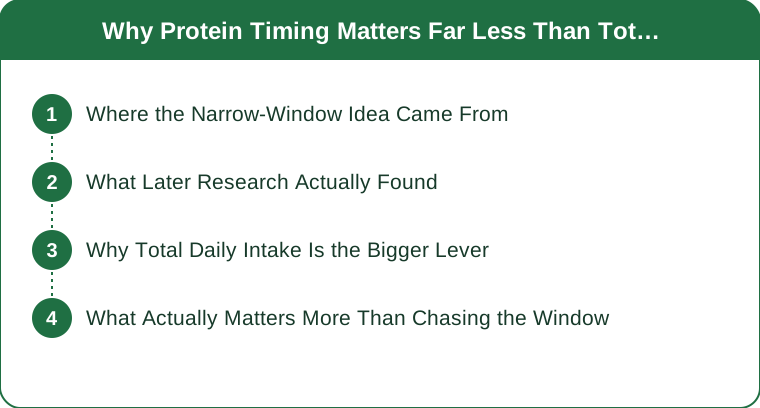
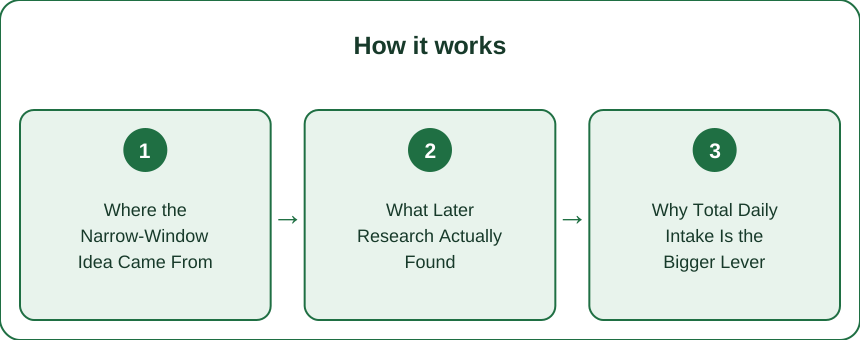
Where the Narrow-Window Idea Came From
The origin: early research on fasted-state training showing a meaningful post-workout protein benefit, results that got generalized into a strict thirty-to-sixty-minute rule applied to all training contexts, including ones where that fasted premise didn’t actually hold.
What Later Research Actually Found
The correction: subsequent studies controlling for total daily protein intake finding that the timing window mattered far less than originally believed once total intake was equal, with the practical difference between immediate and several-hours-later protein intake turning out to be small.

Why Total Daily Intake Is the Bigger Lever
The real driver: total daily protein intake, distributed reasonably across meals, correlating far more strongly with muscle protein synthesis and strength outcomes over weeks and months than the precise timing of any single post-workout meal.
What Actually Matters More Than Chasing the Window
The practical priority: hitting a consistent daily protein target, roughly spread across three to four meals, mattering considerably more than stressing over a specific post-workout minute count, and the frame (the anabolic window is real but far wider and less strict than the popular thirty-minute version — consistent total daily protein intake is what actually drives results, not precise post-workout timing.)
The idea of a narrow post-workout anabolic window, protein needing to be consumed within roughly thirty minutes of training or the benefit is largely lost, has been repeated so often it’s treated as settled fact, but early research on fasted-state training that produced the original result got generalized into a strict rule applied to training contexts where that fasted premise didn’t actually hold. Later studies that controlled for total daily protein intake found the timing window mattered far less than originally believed once total intake was equal, with the practical difference between immediate and several-hours-later protein intake turning out to be small. Total daily protein intake, distributed reasonably across meals, correlates far more strongly with muscle protein synthesis and strength outcomes over weeks and months than the precise timing of any single post-workout meal, which means hitting a consistent daily target spread across three or four meals matters considerably more than stressing over a specific post-workout minute count.
Keep Reading
This article is for general informational purposes only and is not medical advice. Always consult a qualified health professional for guidance specific to you.