Why Protein Timing Matters a Lot Less Than Your Daily Total — What the Research Actually Shows
Quick Answer: Total daily protein intake — generally around 0.7-1 gram per pound of body weight for active women — matters far more for muscle building and recovery than eating protein within a specific ‘anabolic window’ after a workout; the window is real but much wider than the 30-45 minutes commonly claimed.
The idea that you have a narrow post-workout window to eat protein or lose the benefits of your training has been repeated so often it feels like established fact. Current research paints a more relaxed picture.

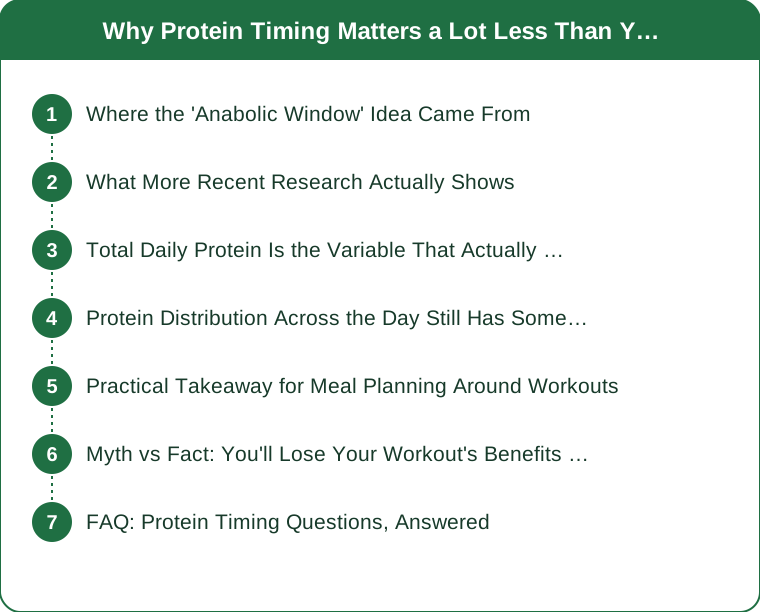
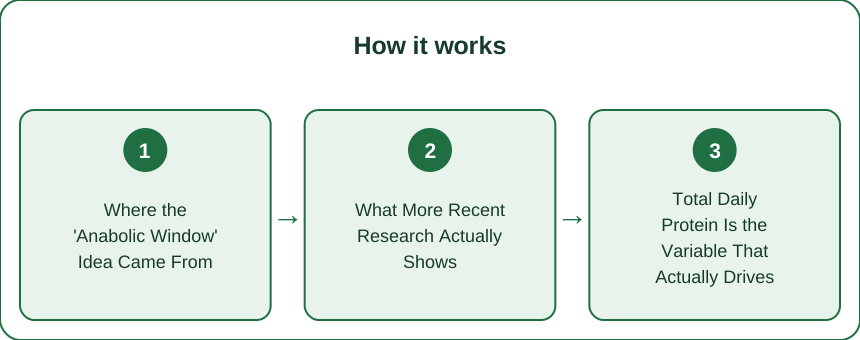
Where the ‘Anabolic Window’ Idea Came From
Early research on post-exercise protein timing did find a benefit to eating protein soon after training compared to eating none at all for many hours, and that finding got compressed over time into the much stricter ‘30-minute window’ rule that circulated in gyms and supplement marketing. The original research didn’t actually support that narrow a window — it compared eating soon after exercise versus eating nothing for hours, which is a very different comparison than 30 minutes versus 90 minutes.
What More Recent Research Actually Shows
More recent studies comparing protein intake within an hour of training versus a few hours later, with total daily protein held constant, generally find minimal to no meaningful difference in muscle growth or recovery outcomes. The window for meaningful benefit appears to be much broader than originally claimed — closer to several hours around a workout rather than a tight 30-45 minute cutoff, which makes the practical stress around ‘missing the window’ largely unnecessary.
Total Daily Protein Is the Variable That Actually Drives Results
Across the research, total daily protein intake consistently shows a stronger relationship to muscle growth and recovery than the specific timing of any individual meal. For most active women, a general target of roughly 0.7-1 gram of protein per pound of body weight per day, spread across meals, is a more useful thing to track and hit consistently than obsessing over a post-workout window.

Protein Distribution Across the Day Still Has Some Evidence Behind It
While the tight anabolic window isn’t well supported, there is more consistent evidence that spreading protein relatively evenly across 3-4 meals — rather than eating almost none until a huge dinner — supports muscle protein synthesis slightly better than a heavily lopsided distribution. This is a softer, more flexible guideline than the anabolic window myth, and it’s easier to actually sustain.
Practical Takeaway for Meal Planning Around Workouts
Given the research, a genuinely practical approach is to eat a protein-containing meal or snack sometime within a few hours of training — whenever fits your schedule — rather than rushing to hit a narrow post-workout deadline. This removes a source of unnecessary stress for people who train fasted in the morning and can’t eat immediately after, or whose schedule doesn’t allow an instant post-workout meal.
Myth vs Fact: You’ll Lose Your Workout’s Benefits If You Don’t Eat Protein Within 30 Minutes
Myth. Current evidence doesn’t support a meaningfully worse outcome for eating protein 1-2 hours after training compared to eating it in the first 30 minutes, as long as total daily intake is adequate. Fact: consistently hitting your daily protein target across the week has a far larger measurable effect on muscle outcomes than the precise timing of any single meal — the window stress is largely disproportionate to its actual impact.
FAQ: Protein Timing Questions, Answered
Should I still eat something after a hard workout?
Yes — eating within a reasonable window (a few hours) supports recovery and makes hitting your daily total easier, it just doesn’t need to happen within a strict 30-minute deadline.
Does protein timing matter more for building muscle versus just maintaining it?
The research doesn’t show a strong distinction here — total intake remains the primary driver in both cases, with timing playing a comparatively minor role.
Is it better to get protein from whole food or a shake after training?
Both work; a shake is convenient when a full meal isn’t practical soon after training, but there’s no inherent advantage to a shake beyond convenience if your daily total protein target is being met either way.
TL;DR:
- The strict 30-45 minute ‘anabolic window’ isn’t well supported by current research
- Total daily protein intake (roughly 0.7-1g per pound of body weight for active women) matters far more
- Spreading protein across 3-4 meals has modest support, but isn’t the same as a strict post-workout deadline
- Eat protein within a few relaxed hours of training and stop stressing about the exact minute
The anabolic window isn’t a myth exactly — it’s just much wider and much less strict than gym folklore made it sound.
Keep Reading
This article is for general informational purposes only and is not medical advice. Always consult a qualified health professional for guidance specific to you.