Why a Plant-Based Protein Target Has to Be Higher Than the Number You Read
Quick Answer: Plant proteins are digested slightly less completely and are usually lower in leucine, the amino acid that triggers muscle protein synthesis. A practical adjustment is 10 to 20 percent above your animal-protein target — so a 100 gram goal becomes 110 to 120 grams — plus more attention to hitting 25 to 40 grams per meal rather than grazing.
You hit your protein target every day, on paper.
The results do not match what the same number produced two years ago, and nothing else about your training has changed.
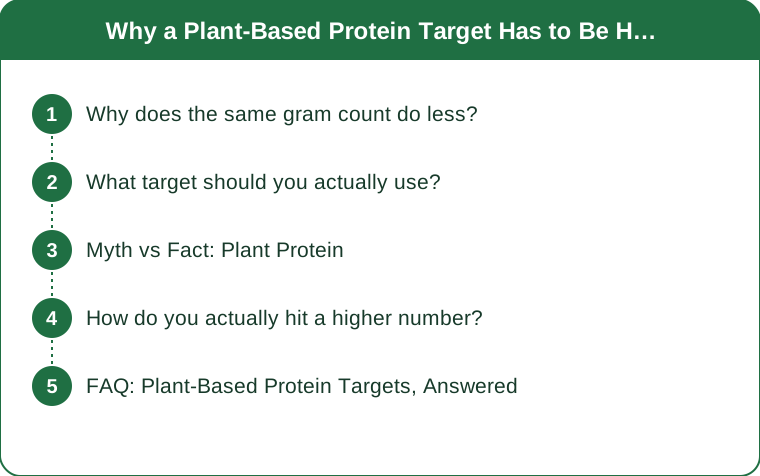
Why does the same gram count do less?
Two separate mechanisms, and they stack.
Digestibility is lower. Plant proteins come packaged with fiber and antinutrients that reduce how much gets absorbed. Digestibility scores for animal proteins typically run in the mid-90s as a percentage; for many plant proteins, they run 10 to 20 points lower. That difference alone means 100 grams eaten is meaningfully less than 100 grams available.
Leucine content is lower. Muscle protein synthesis is triggered when leucine in the blood crosses a threshold, roughly 2 to 3 grams in a single meal. Whey is about 10 to 11 percent leucine; most legumes and grains are 6 to 8 percent. You need noticeably more total protein in a meal to reach the same trigger.
Amino acid profiles are incomplete individually. Legumes are low in methionine, grains are low in lysine. Eaten together across a day, this is a solved problem — you do not need to combine them at each meal. But a diet leaning heavily on one source can genuinely fall short of a specific amino acid.
Processing changes the numbers substantially. Tofu, tempeh, and isolated pea or soy protein are far more digestible than whole beans, because processing removes much of what was blocking absorption. Soy protein isolate scores close to animal proteins.
The gap narrows as total intake rises. At a high enough total, the profile differences matter much less. This is the reason the practical fix is simply to eat more rather than to eat differently.
What target should you actually use?
Take your usual number and adjust it, then check the per-meal distribution.
Add 10 to 20 percent to the total. If your reference is roughly 1.6 grams per kilogram of bodyweight for an active person, aim closer to 1.8 to 2.0 on a fully plant-based diet. For a 65 kilogram woman that is about 117 to 130 grams rather than 104.
Aim for 30 to 40 grams per meal rather than 20 to 25. The leucine threshold is per meal, not per day. Four meals at 30 grams outperforms six snacks at 20, and this distribution effect is larger on a plant-based diet than on an omnivorous one.
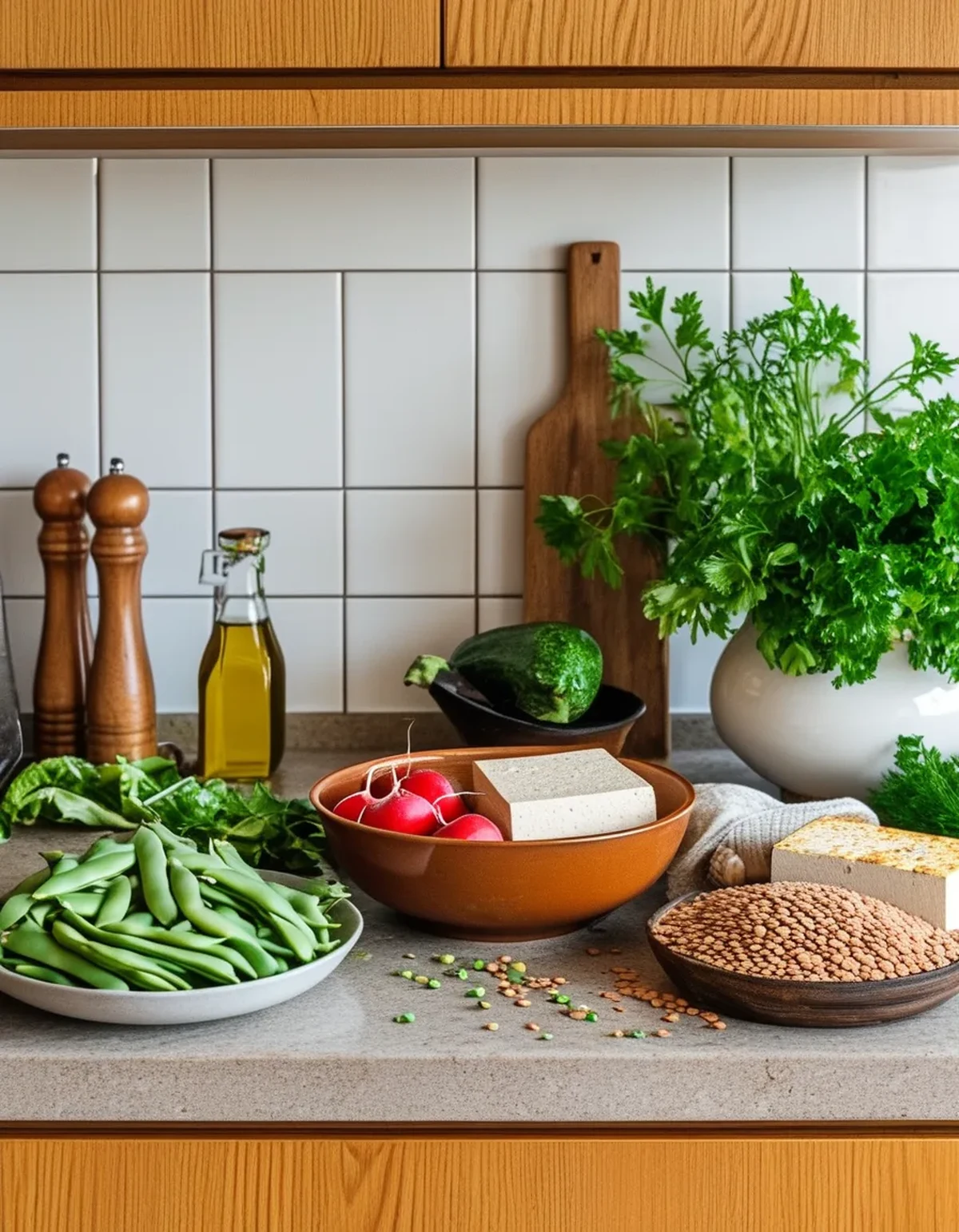
Lean on the highest-quality plant sources. Soy in all its forms — tofu, tempeh, edamame, soy protein isolate — has a complete profile and good digestibility. Seitan is high in protein and low in lysine, so pair it with legumes. Pea protein is high in leucine relative to other plants.
Count the incidentals. Grains, vegetables, nuts, and seeds contribute 20 to 30 grams a day on a typical plant-based diet. People eating this way often undercount because they are only tallying the obvious sources.
Cooking changes availability. Soaking, sprouting, and thorough cooking of legumes measurably improve digestibility. Undercooked beans deliver less than the label suggests and are harder on your gut at the same time.
Myth vs Fact: Plant Protein
Myth: You have to combine proteins at every meal. Fact: This was overturned decades ago. Your body maintains an amino acid pool that buffers across the day. Eating varied sources over 24 hours is sufficient; rice-and-beans-at-every-sitting is not required.
Myth: Plant protein cannot build muscle. Fact: Matched-total studies show comparable muscle gains when total protein and training are equated. The catch is in the word matched — the totals have to actually be equal after accounting for digestibility, which is what the adjustment above is for.
Myth: Soy is a problem for hormones. Fact: Human research does not support meaningful hormonal effects at normal intakes. Soy remains the most complete and best-digested plant protein available, and avoiding it makes hitting a target considerably harder.
Myth: You need a supplement. Fact: Powders are convenient, not necessary. Tofu, tempeh, lentils, and seitan can get most people there. A powder earns its place when your appetite or your schedule is the actual constraint — which, honestly, it often is.
Myth: More fiber is always better alongside protein. Fact: Very high fiber intake alongside a high plant protein target can reduce absorption and, more practically, fill you up before you hit the number. This is the constraint people run into around 120 grams, and the fix is a more processed protein source, not more beans.
How do you actually hit a higher number?
Volume is the real obstacle, so solve for volume.
Anchor each meal with a concentrated source first. Tofu, tempeh, seitan, or a powder — then build the rest of the plate around it. Building the plate first and topping up with protein is what leaves people 30 grams short at 9pm.
Use one liquid serving a day. A shake with soy or pea protein delivers 25 to 30 grams without any of the fullness that the equivalent in lentils creates.
Keep the highest-density options visible. Per 100 grams cooked: seitan around 25 grams, tempeh around 19, firm tofu around 15, lentils around 9. Knowing those four numbers removes most of the guesswork.
Watch the seasonal shift. As the weather cools and meals move toward soups and stews, plant protein density per bowl tends to drop. Adding lentils or tofu to autumn soups is the easiest correction of the year.
Track for one week, not forever. Most people find they are 20 to 30 grams below their assumed intake, discover which two meals are responsible, and fix it permanently. If you have kidney disease or another condition affecting protein needs, set targets with a clinician rather than a general guideline. This is general information, not medical advice.
FAQ: Plant-Based Protein Targets, Answered
How much more protein do I actually need on a plant-based diet?
Roughly 10 to 20 percent above an equivalent omnivorous target, which for most active women means moving from about 1.6 to about 1.8 to 2.0 grams per kilogram. The adjustment accounts for digestibility and lower leucine content, not for any deficiency in plant foods.
Is pea protein as good as whey?
Close, when the dose is right. Pea protein is lower in leucine and methionine, so a 30 gram serving does roughly what a 25 gram whey serving does. Blends of pea and rice protein close the amino acid gap almost entirely.
Why do I feel so full before hitting my target?
Because whole plant proteins arrive with substantial fiber and volume. This is the main practical obstacle above about 120 grams a day. More concentrated sources — tofu over beans, a shake over a bowl — solve it without changing anything about the quality of the diet.
TL;DR:
- Plant proteins digest less completely and carry less leucine, so the same grams do less work.
- Add 10 to 20 percent to your total and aim for 30 to 40 grams per meal rather than smaller frequent servings.
- Soy, seitan, tempeh, and pea protein are the highest-leverage sources; combining at every meal is unnecessary.
- Volume, not quality, is the real obstacle — which is why one liquid serving a day solves most shortfalls.
The number on your tracker was never wrong. It was just measuring the wrong thing, and the fix is a multiplier rather than a rethink.
Keep Reading
This article is for general informational purposes only and is not medical advice. Always consult a qualified health professional for guidance specific to you.