Protein Snacks, Ranked: From Genuinely Great to Marketing in a Wrapper
Quick Answer: Greek yogurt, skyr, cottage cheese, boiled eggs, edamame, and plain jerky are the top tier — 15–20g of protein per serving, high satiety, low cost. Protein bars are a mixed field: the rule is 8g+ protein, under 10g sugar, and ingredients you can pronounce. Protein chips and cookies are slightly improved junk food. The pattern across the whole ranking: whole foods beat engineered ones on satisfaction per calorie almost every time.
The protein snack aisle has expanded into chips, cookies, candy bars, and puffs, all claiming gym credentials on the front of the package.
Some of them deliver. Several are dessert with a gym membership and a 40% markup.
Here’s the honest ranking — judged on protein per calorie, how full it actually keeps you, and whether the label is telling the truth. Bring skepticism; leave with a shopping list.

What Are the Best High-Protein Snacks?
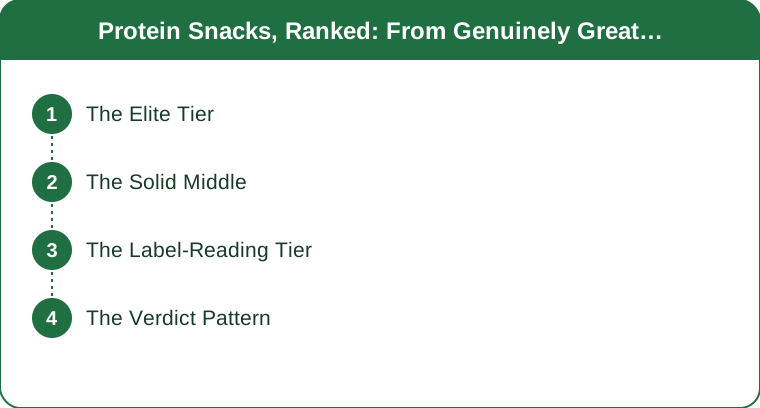
The elite tier. All whole foods, and that’s not a coincidence.
Greek yogurt and skyr — 15–20g per serving. The undisputed champions: satiating, cheap, versatile, and available everywhere. Buy plain and add your own fruit; the flavored versions frequently carry 12–20g of added sugar. Skyr edges out Greek yogurt slightly on protein density.
Cottage cheese — around 14g per half cup. The comeback story continues, and deservedly. It’s the highest protein-per-dollar item in most grocery stores. Whipped versions have fixed the texture objection that kept people away for two decades.
Boiled eggs — 6g each. Portable completeness: protein plus fat plus micronutrients in a package with its own case. Two eggs is a real snack for about 140 calories. Boil six on Sunday.
Edamame — 17g per cup. Protein plus 8g of fiber, and weirdly fun to eat, which counts for more than nutrition writing usually admits. Frozen, microwaved, salted.
Plain jerky — 9–12g per ounce. Shelf-stable density, genuinely convenient, and the classic for good reason. Watch the sodium, which is often 400–600mg per serving, and check for added sugar in the flavored varieties.
Which Protein Snacks Are Merely Fine?
The solid middle. Useful, not spectacular.
String cheese — 7–8g. Eight grams of pure convenience. Nobody’s favorite snack, always the right answer at 4pm when the alternative is the vending machine.
Roasted chickpeas — 6–7g per ounce. The crunchy hybrid: satisfies the chip impulse with fiber attached. Lower protein than the tier above, better than any actual chip.
Tuna pouches — 17–20g. Elite protein numbers, situational social acceptability. Excellent at home, a considered decision in an open-plan office.
Protein shakes — 25g in about ten seconds. Convenience royalty, satisfaction commoner. Drinking your calories fills you up briefly and then doesn’t — liquid moves through the stomach much faster than solid food, so a shake that matches a yogurt on protein loses badly on how long it holds you. Genuinely useful post-workout or when you’re out of time; a poor default.

How Do You Judge a Protein Bar?
Protein bars span saints and candy, sometimes on adjacent shelves. Three rules sort them in aisle-time:
- 8g of protein minimum, and preferably 12g+. Below 8, it’s a granola bar with a claim.
- Under 10g of sugar. Watch for sugar alcohols too — erythritol and maltitol keep the sugar number down and cause digestive drama for a lot of people at bar-sized doses.
- Ingredients you can pronounce, and a list short enough to read while standing there.
A useful cross-check: compare the protein-to-calorie ratio. A good bar runs around 20g protein for 200 calories. A bar at 10g protein for 250 calories is a candy bar that has been to the gym once.
And then the honest bottom of the ranking. Protein chips and protein cookies mostly rank as slightly improved junk food. A protein cookie with 10g of protein and 250 calories is a cookie — a marginally better cookie, and still a cookie. Fine as a treat, funny as a nutrition strategy. There’s nothing wrong with eating one; there’s something a bit silly about counting it toward a protein target.
What Nobody Tells You About Protein Snacks
Protein-per-dollar matters more than protein-per-serving. Cottage cheese runs roughly 5–8g of protein per dollar. A protein bar runs about 4–6g per dollar. Over a year that difference is real money for the same nutrition.
You probably need less than the marketing implies. Most adults do well on 0.6–1.0g of protein per pound of body weight if training seriously, and considerably less if not. If you’re hitting your target at meals, snacks don’t need to be protein-optimized at all — they can just be food.
Satiety and protein content aren’t the same thing. A shake with 25g leaves you hungry in an hour; two eggs with 12g don’t. Texture, volume, fat content, and how much chewing is involved all matter, and none of them appear on the front of the package.
The “high protein” label is unregulated in most contexts. It can appear on products with 5g. Read the panel, not the claim.
The quiet lesson of the whole ranking: whole-food snacks beat engineered ones on satisfaction per calorie almost every time. The yogurt outperforms the bar, which outperforms the cookie. The aisle’s gym branding was always optional — the fridge section was carrying the team.
Mini FAQ
How much protein should a snack have?
Aim for 10–20g if the snack is doing real work in your day — bridging a long gap, or supporting training. Below 10g it’s fine as food but won’t meaningfully affect satiety or your daily total. There’s no benefit to pushing a single snack above 30g.
Are protein bars actually healthy?
Some are, many are candy with a claim. Apply the three rules: 8g+ protein, under 10g sugar, short readable ingredient list. Even the good ones are best treated as convenience for the days when real food isn’t an option, rather than a daily staple.
What’s the cheapest high-protein snack?
Cottage cheese and boiled eggs, comfortably. Both deliver more protein per dollar than any packaged product, and both keep for days with essentially no prep. Frozen edamame is a close third.
TL;DR:
- Elite tier: Greek yogurt, skyr, cottage cheese, boiled eggs, edamame, plain jerky — all 6–20g, all whole foods.
- Solid middle: string cheese, roasted chickpeas, tuna pouches, shakes (convenient, poor satiety).
- Bar rules: 8g+ protein, under 10g sugar, pronounceable ingredients, ~20g protein per 200 calories.
- Protein chips and cookies are improved junk food — fine as treats, not as strategy.
- Whole foods beat engineered ones on satisfaction per calorie, and on protein per dollar.
Yogurt, eggs, and edamame at the top; bars by label law; cookies as honest treats. The protein snack was solved before the marketing arrived — the rankings just put the fridge back above the aisle.
Keep Reading
This article is for general informational purposes only and is not medical advice. Always consult a qualified health professional for guidance specific to you.